What a neighborhood rock garden reveals about getting people to embrace change, take ownership, and contribute more.
You can have the best strategy, the clearest goals, and a team full of talented people. But if nobody takes ownership, speaks up, or contributes beyond what’s required, how much progress are you really going to make?
Leaders spend enormous amounts of energy trying to get people to embrace change, share ideas, and take initiative. Sales professionals face a similar challenge: getting customers to engage, trust, and act.
Yet a man in my neighborhood has inspired people from more than 130 countries to participate in something he created. No fancy title. No marketing campaign. No financial incentives. Just a garden filled with painted rocks.
And the more I’ve watched Dave Dean, the more I’ve realized he’s demonstrating something every leader and salesperson needs to understand: People are more willing to participate when we make it easy for them to contribute and show them their contribution matters.
It Started With a Parking Ticket
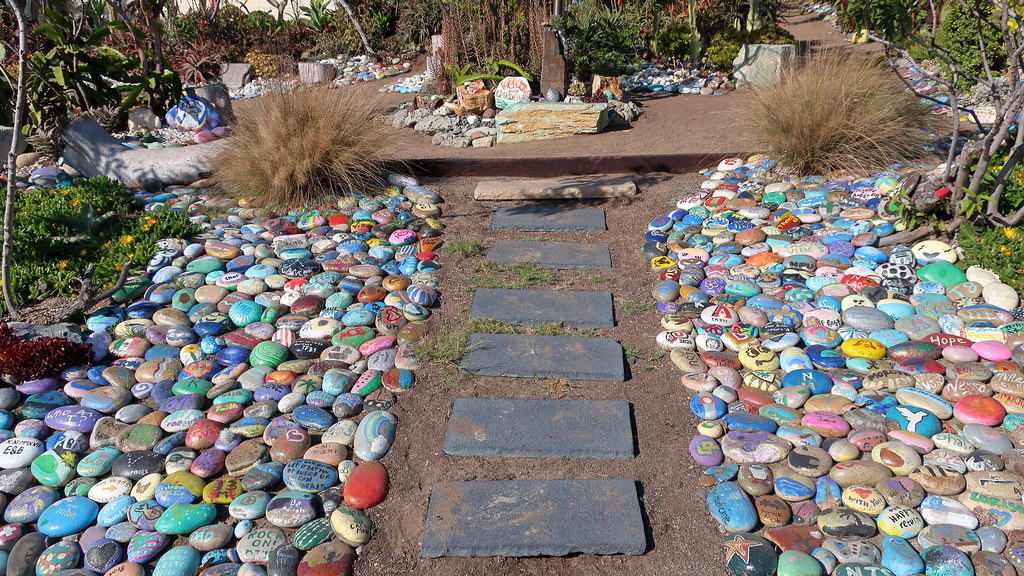
I live within walking distance of Dave’s Rock Garden in Encinitas, California, and pass it whenever I’m headed to the beach. It’s a colorful collection of painted rocks, beautiful plants, and personal messages left by visitors from around the world. I even have my own rock there!
But the real attraction isn’t just the garden. It’s Dave himself. You’ll often find him welcoming strangers, striking up conversations, and encouraging people to paint a rock of their own. He even has the rocks ready to go. No appointment necessary. No artistic talent required. Just show up and leave a little piece of yourself behind.
What’s fascinating is that none of this began with a plan to create a community landmark.
Back in 2015, Dave noticed people getting parking tickets along B Street near Moonlight Beach, even though there were no signs or red curbs indicating they couldn’t park. Most of us would have gotten irritated, complained to a friend, maybe posted something on social media, and gone about our day.
Not Dave. He stood along the street warning drivers, gathered 1,287 signatures, and took his concerns to the City Council. Eventually, the city painted the curb red, making the parking restriction clear.
Problem solved. Mission accomplished. Except Dave wasn’t finished.
He’d spent so much time outside talking with people that when the parking issue was resolved, he missed those interactions. So he found another reason to keep showing up. He started picking up trash along that same stretch of land where he’d been warning drivers. Then he pulled weeds. Eventually, he began planting drought-tolerant succulents.
What started as an effort to protect people from parking tickets was slowly becoming a place that brought people together.
Now, if you’ve ever tried to make a change, you know that not everyone immediately appreciates your efforts. Dave even received a cease-and-desist order from the city, instructing him to remove everything. But he believed in what he was creating. After waiting to see what would happen, he eventually returned to the garden, sometimes working by flashlight, determined to make it something worth preserving.
Today, the land remains part of Moonlight Beach State Park Reserve, and the city has embraced the garden as a beloved community landmark. That once-neglected lot is now filled with painted rocks contributed by people of all ages, from every state and nearly every corner of the world.
What began with one man’s willingness to take action has become something thousands of people want to be part of.
Change Begins With Ownership, Not a Perfect Plan
We tend to think meaningful change requires a clear vision, a detailed strategy, and a roadmap showing exactly where we’re headed. But sometimes change begins when we simply stop accepting what’s not working.
Dave didn’t envision a garden visited by people from around the world. He saw a problem, took action, and stayed open to what came next. One step revealed another opportunity.
Think about how often we encounter something that isn’t working. A frustrated customer. An overwhelmed teammate. A broken process everyone complains about but nobody fixes. And how often do we hear, “That’s not my responsibility,” or “Someone should really do something about that”?
Dave reminds us that you don’t have to own the problem to take ownership of your response.
You may not control company policies, your customer’s budget, or your manager’s decisions. But you do control whether you speak up, offer a solution, ask another question, or take one step toward making things better.
For leaders, that might mean testing a new approach rather than waiting for every detail to be perfect. For sales professionals, it could mean reaching out to a customer with an idea that addresses a problem they haven’t even mentioned yet.
We don’t always need to know exactly how things will turn out before taking the first step. We need the courage to begin, the flexibility to adapt, and the willingness to keep going when things don’t unfold as expected.
Sometimes the opportunity isn’t visible until we’re willing to do something differently.
Are You Asking People to Care More While Making It Harder for Them to Contribute?
Here’s where Dave’s story gets especially interesting. He doesn’t stand in the garden giving speeches about the importance of community. He welcomes people, offers them a rock, and encourages them to paint it. He removes the friction between wanting to participate and actually participating.
And that’s something I think we overlook in business. We tell employees to take ownership, embrace change, speak up, and contribute more. But have we made it easy for them to do those things?
Maybe your employees have to navigate four layers of approval to solve a customer problem. Maybe you ask for feedback but never tell people what happened to their suggestions. Maybe your team has great ideas but has learned that sharing them only creates more work. Then we wonder why people aren’t taking initiative.
You can’t demand ownership while discouraging it through your own behavior or processes.
For leaders, this means giving people the clarity and authority to act without waiting for permission at every turn. Instead of saying, “My door is always open,” ask one specific question: “What’s one thing slowing you down that we could change?”
For sales professionals, it means making the next step simple and relevant. Are you asking customers to jump through unnecessary hoops? Are you overwhelming them with information when what they really need is clarity and confidence?
Sometimes the difference between someone taking action and doing nothing isn’t motivation. It’s how easy you’ve made the next step.
Dave doesn’t just invite people to paint rocks. He has the rocks ready.
Make Room for Others to Make a Difference
What I love most about Dave’s garden is that he didn’t have to create every beautiful thing in it. He created a place where other people could contribute something beautiful.
Some rocks are funny. Others are deeply personal. One was painted by a five-year-old girl with cerebral palsy and carries the words, “Hope is a waking dream.” Imagine how many people might walk by, read those words, and find exactly the encouragement they needed that day.
That’s what happens when people feel invited to contribute something meaningful.
The best leaders don’t need to be the source of every great idea. They create conditions where other people’s ideas and talents can flourish. The best salespeople don’t dominate every conversation. They ask thoughtful questions, listen for what matters, and make customers feel understood.
And here’s something else worth considering. When people contribute, do they ever hear about the difference they made?
If an employee suggests a process improvement, do you tell them how much time it saved? If a colleague steps up during a difficult week, do you acknowledge the impact? If a customer shares feedback that improves your service, do you follow up and let them know?
People are more likely to keep contributing when they know their efforts matter. That’s The Human Edge™. Technology can help us accomplish more in less time. But making someone feel seen, heard, and valued still requires intention.
This November, Make Gratitude Something People Can Feel
As we head into Thanksgiving, we’ll hear plenty about the importance of gratitude. And I’m all for it. But I’d like to challenge us to move beyond simply feeling grateful to making sure others experience our appreciation.
A CEO who personally acknowledges someone whose contributions often go unnoticed. A sales professional who calls a longtime customer without an agenda. A manager who recognizes the employee who consistently makes everyone else’s job easier. Nothing elaborate. Just meaningful action.
That’s what I mean when I encourage people to become a Human Highlighter™. Notice the good in others and make sure they know you see it. Be specific, sincere, and timely. Because appreciation that stays in your head doesn’t do much for the person who needs to hear it.
What Will You Do With Your One Rock?
Dave is now in his late sixties, and he still spends time tending his garden most evenings and for hours on weekends. Not because someone requires him to. Not because it’s in his job description. And certainly not because he has nothing else to do.
He keeps showing up because the garden matters to him. And somewhere along the way, it began mattering to thousands of other people, too.
We spend so much of our professional lives chasing big goals. Bigger revenue. Greater influence. More recognition. Another milestone. And there’s nothing wrong with ambition. I’m a big believer in setting goals, stretching ourselves, and doing the work required to succeed.
But sometimes we become so focused on the size of our achievements that we underestimate the significance of our everyday actions.
Dave didn’t change the world by doing one enormous thing. He changed a little corner of it by doing small things consistently, and other people joined him.
So here’s my challenge for November. Look around. What have you been waiting to change because you don’t have the entire plan figured out? Where might you be making it harder than necessary for someone to contribute? And who’s one person whose efforts deserve to be recognized?
You don’t need to solve everything. You don’t need a committee, a budget, or a perfect plan. You just need to begin.
Because the difference you make isn’t always measured by how much you accomplish. Sometimes it’s measured by what becomes possible for others because you cared enough to act.
And who knows? Your one small act might inspire someone else to add a rock. And another. Until one day, you look around and realize you’ve helped create something far bigger than yourself.
Let’s connect to design a customized program to sharpen your Human Edge™!